Best Time to Install Sod & New Plants in North Texas
Thinking about new sod or plants in North Texas? Learn the best seasons to install and why peak summer heat can quickly ruin your landscaping investment.
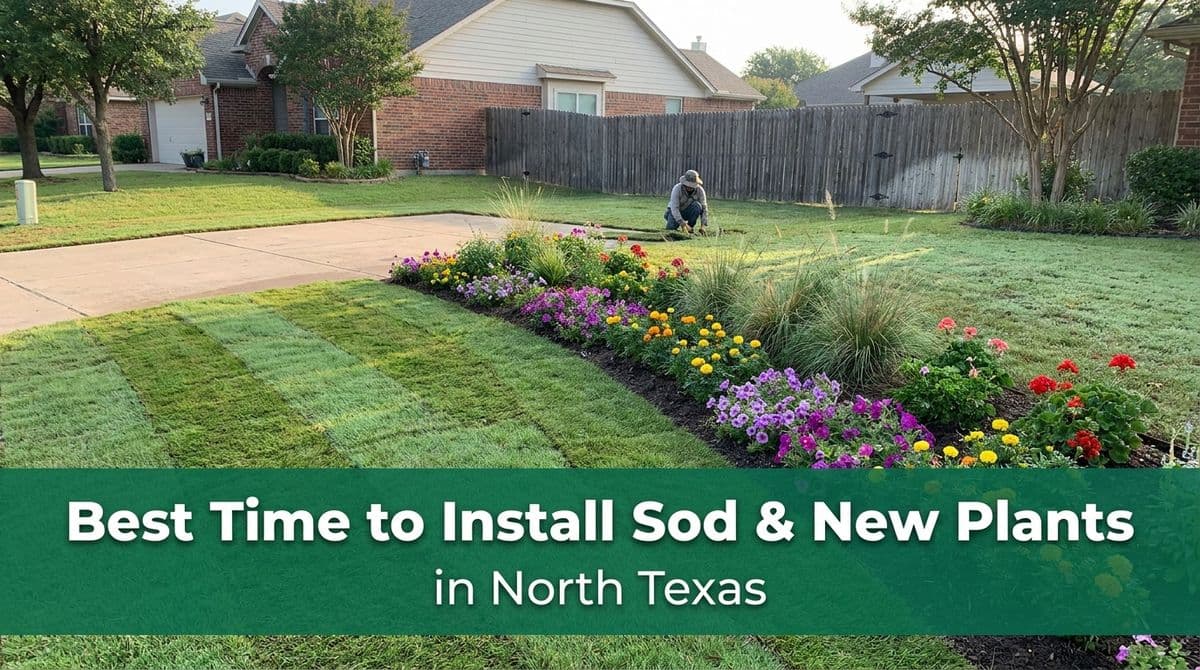
“Can We Install Sod Now… or Will the Heat Kill It?”
We recently got a call from a homeowner — let’s call him Brian — in Dallas who wanted sod, some new landscaping, and a little tree trimming. He was flexible on timing and basically said, “Anytime works.”
Because of the heat we’ve been having, we found ourselves telling Brian the same thing we tell a lot of North Texas homeowners this time of year: “Tree trimming is fine right now, but for sod and new plants, we really want to wait until around September so they have a real chance to thrive.”
That conversation inspired us to put together this guide on the best time to install sod and new plants in North Texas — and why that blazing summer heat can absolutely ruin your investment if you’re not careful.
North Texas Seasons: What Your Lawn and Plants Actually Feel
On paper, North Texas has four seasons. In reality, for your yard, it feels more like this:
- Late winter & early spring (Feb–March): Cool, sometimes wet, soil starting to warm up.
- Spring (April–May): Mild temps, decent rainfall — roots love this period.
- Summer (June–August): Long, hot, dry stretches; soil bakes and dries fast.
- Early fall (Sept–October): Cooler nights, warm soil, usually fewer extremes.
The key is remembering that plants and sod care more about soil temperature and moisture than the date on the calendar. Our summers push both to the limit.
Best Time to Install Sod in North Texas
For most North Texas lawns (Bermuda, St. Augustine, Zoysia), we usually recommend:
- Best: Late spring through early summer (roughly April to early June)
- Also very good: Early fall (September into early October)
- Risky: Peak summer heat (late June–August), especially during heat waves
In late spring and early summer, the soil is warm, which encourages fast rooting, but we haven’t hit weeks of triple-digit temps yet. In early fall, the soil is still warm from summer, but the air is cooler and easier on new sod.
That’s exactly why, when Brian called in midsummer asking about sod installation, we told him we preferred to plan the project now and install closer to September. That timing gives his new lawn a far better shot at success.
Why Summer Heat Can Ruin New Sod
We understand the urge to “fix the yard now.” But here’s what happens when you lay fresh sod in the middle of a North Texas heat wave:
- Shallow roots dry out fast. Fresh sod has very short roots. On 100°F days, the top couple of inches of soil can dry in hours.
- Watering gets extreme. You may have to water several times a day for weeks, which is expensive and sometimes restricted by city watering rules.
- Stress invites disease. Heat + humidity + stressed grass is the perfect recipe for fungus and die-off.
- Edges and corners burn first. We see a lot of yards where the middle survives and all the seams and corners turn brown and crispy.
Technically, we can install sod in summer, but we’re always honest about the risk: it’s easy to spend thousands of dollars on sod only to watch big patches die because the weather was stacked against you.
Best Time to Plant New Shrubs, Perennials, and Flowers
New plants are even more sensitive than sod because they usually come in smaller containers with limited root systems. In North Texas, we generally aim for:
- Prime planting windows: Fall (Sept–Nov) and early spring (Feb–April)
- High risk: Peak summer (late June–August), especially for tender or young plants
In fall, plants can focus on growing roots instead of fighting to keep their leaves cool. By the time the next summer rolls around, a well-planted shrub or perennial has deeper roots and can handle heat and occasional drought much better.
Summer plantings often end up with scorched leaves, constant wilting, and heavy water needs. That’s why we told Brian we could absolutely talk through his plant choices now, but we’d rather install once conditions are friendlier.
North Texas Clay Soil: How We Prepare for Sod and Plants
One of the biggest mistakes we see is laying beautiful sod or planting new shrubs directly on top of hard clay and hoping for the best. Our native North Texas soil is usually heavy, compacted clay that:
- Holds water too long on top, then dries into a brick
- Makes it hard for roots to penetrate deeply
- Can create drainage problems near foundations
When we prepare for sod and planting, we like to:
- Remove old grass and weeds so new roots don’t have to fight for space.
- Loosen the top 3–4 inches of soil with tilling or aeration to break up compaction.
- Incorporate compost and soil amendments to improve drainage and nutrient content.
- Grade the area so water flows away from the house and doesn’t pool.
This prep work is just as important as picking the right time of year. Good soil + good timing = a lawn and landscape that actually last.
Homeowner Checklist Before Sod or New Plant Installation
If you’re thinking about a new lawn or fresh landscaping, here’s a quick checklist we often walk through with customers like Brian:
- Decide what areas need sod vs. beds, pathways, or mulch.
- Check your sprinkler system or hose access — can you water new installs easily?
- Look at your sun patterns — which spots are full sun, part shade, or dense shade?
- Consider any pets or heavy foot traffic that will affect grass choice.
- Think about long-term maintenance: mowing height, watering habits, and fertilizing.
- Plan ahead for seasonal timing so we’re not installing at the worst part of summer.
When we come out for a consultation, we walk the property with you, answer questions, and put together a plan so that when the right season hits, we’re ready to go.
Common Sod & Planting Mistakes We See in North Texas
To protect your investment, it helps to avoid the missteps we run into most often:
- Installing during a heat wave because “that’s when we had time.”
- Skipping soil prep and laying sod right on top of hard clay.
- Under-watering in the first 2–3 weeks while roots are trying to establish.
- Over-watering shaded areas and causing fungus or root rot.
- Planting sun-lovers in deep shade (or shade plants in full, hot sun).
When we talk with homeowners like Brian, we’d rather be upfront about these risks than come back later to replace dead sod or plants. A little patience with timing and preparation usually saves a lot of money and frustration.
Planning Now So Your Yard Thrives Later
For Brian, tree trimming was a “yes” right away because it’s safe even in the heat. For his sod and new landscaping, we scheduled a consultation to design everything now and target installation for early fall, when North Texas weather will give his yard a real chance to thrive.
If you’re in the Dallas–Fort Worth area and wondering whether now is the right time for sod or new plants, we’re always happy to take a look, talk through your specific yard, and recommend the best timing. Your lawn and landscape are an investment — and with the right season, preparation, and care, it’s one that should pay off for years to come.